Streamline Your 2026 Build with a Canva Planner
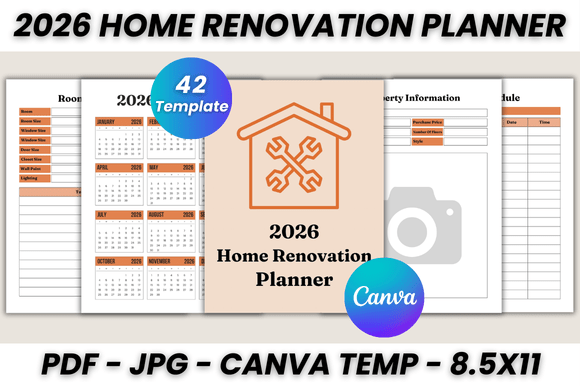
Taking on a home renovation is a massive undertaking that blends financial management, logistical coordination, and creative vision. While the excitement of a new kitchen or a finished basement drives us, the reality is often a chaotic mix of scattered spreadsheets, lost receipts, and miscommunicated timelines. If you are planning a project for the coming year, the 2026 Home Renovation Planner Canva Template offers a structured solution to bring order to that chaos. This isn't just a calendar; it is a comprehensive 42-page digital asset designed specifically for the modern homeowner or project manager who prefers a visual, accessible approach to planning.
A Visual Approach to Project Management
The core appeal of this planner lies in its modern typography and clean layout. In project management, visual hierarchy is not just an aesthetic choice—it is functional. A cluttered document causes stress, while a well-organized one promotes clarity. This template utilizes a sans serif font style that prioritizes readability, ensuring that critical details like contractor quotes and budget figures stand out immediately. The design personality is professional yet approachable, avoiding the sterile look of standard Excel sheets in favor of something that feels more like a cohesive brand identity for your home project.
Because the planner is built within Canva, it functions as a fully editable Canva template. You are not locked into a static PDF. The visual characteristics—colors, layout, and text—can be adjusted to match your personal style. This flexibility allows you to create a document that feels personal and motivating. Whether you prefer a minimalist black-and-white aesthetic or a color-coded system for different rooms, the template adapts. It transforms the mundane task of scheduling into a creative design exercise, making the planning phase something you actually want to engage with.
Comprehensive Coverage: From Sketches to Warranties
A renovation involves a thousand moving parts, and the 2026 Home Renovation Planner attempts to capture them all. The structure is logical, moving you through the lifecycle of a project. It begins with Property Information and Details Checklists, ensuring you have your baseline data organized before you pick up a hammer. It then moves into the heavy lifting: the 2026 Calendar and Monthly Planner (January through December). This allows you to map out your year visually, blocking out time for demolition, installation, and curing times.
One of the most practical features is the financial tracking section. The Budget Overview and Budget By Room pages allow for granular tracking. It is easy to lose sight of the big picture when buying individual tiles or light fixtures, but having a dedicated space to track these expenses prevents the common "budget creep" that plagues renovations. Furthermore, the inclusion of a Contractor Quotes & Pricing section is invaluable. Instead of digging through email threads to find a painter's estimate, you can log it directly into your planner alongside the Contractor Contact List.
For the creative side of the build, the Project Design Sketch pages are a standout feature. While this is a planner, not a CAD software, having a dedicated space to sketch layouts or paste inspiration images keeps your vision central to the project. The Paint Tracker and Warranty Tracker address the details that are often forgotten until it is too late. Knowing exactly which shade of white you used in the guest bedroom or having the warranty expiration date for your new dishwasher at your fingertips adds a layer of long-term professionalism to your home management.
Leveraging Canva for Flexibility and Collaboration
The choice to build this as a Canva template rather than a static PDF is significant. Canva is a free-to-use online tool that has democratized design. By hosting your renovation planner here, you gain the ability to collaborate. If you have a partner or a general contractor who needs access, you can share the editable link. This eliminates the "version control" nightmare of emailing PDFs back and forth.
The "What is Canva?" section of the product description highlights its utility, but the real value lies in the ease of editing. You can change fonts, sizes, and colors with a few clicks. If you are a small business owner or a designer managing a client's renovation, you can even customize the template to include your own logo, effectively turning it into a branded deliverable for your client. The printable PDF comes in US Letter size (8.5 x 11), but as noted, it can be resized within the platform. This adaptability is crucial for those who might want to print specific pages, like the To-Do Checklist, on smaller index cards, or the Room Schedule on a larger poster for a job site.
Practical Application for the Modern Homeowner
How does this tool influence the actual success of a renovation? It comes down to organization and psychology. The Important Dates & Times page ensures you don't miss delivery windows for appliances, which can delay a project by weeks. The Room Summary gives you a quick snapshot of progress without needing to walk through a construction zone.
For the audience of adults aged 20–50, many of whom are first-time buyers or undertaking their first major remodel, the learning curve is steep. This planner acts as a guide. It prompts you to think about things you might otherwise overlook, such as specific Contractor Contact details or the need for a dedicated Notes section for brainstorming. The inclusion of a Thank You page is a thoughtful touch, encouraging the user to acknowledge the hard work of the tradespeople involved—a small gesture that builds good relationships.
Ultimately, the 2026 Home Renovation Planner Canva Template is more than a collection of pages; it is a management system. It bridges the gap between the chaos of construction and the order of design. By keeping all your data—from the initial sketch to the final warranty—in one accessible, editable, and visually pleasing location, you empower yourself to make better decisions, stick to your budget, and actually enjoy the process of transforming your home.