Psychiatry H&P Clinical Template: Streamlining Mental Health Documentation
In the fast-paced world of mental healthcare, efficiency and clarity are not just conveniences—they are necessities. Whether you are a seasoned psychiatrist managing a full caseload, a psychiatry resident honing your diagnostic skills, or a medical student navigating your first clinical rotation, the documentation process can feel overwhelming. This is precisely where a well-designed Psychiatry H&P Clinical Template becomes an indispensable asset. It is more than just a form; it is a structured framework that guides clinicians through the complexities of psychiatric evaluation, ensuring no critical detail is missed while saving valuable time.
Understanding the Core Components
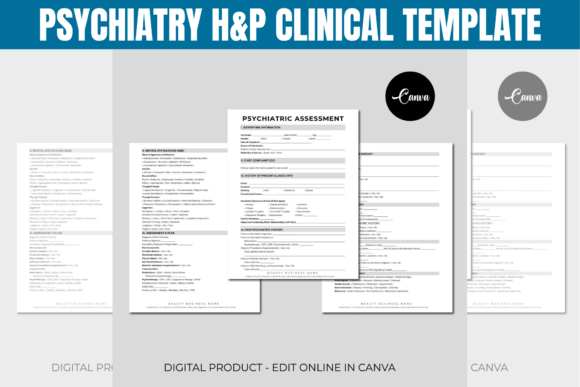
A robust initial psychiatric evaluation note template serves as the backbone of patient documentation. The best templates, like the one we are discussing, provide a logical flow that mirrors the clinical interview itself. It typically begins with the Chief Complaint and History of Present Illness, moving systematically through Past Psychiatric History, Medical History, and Substance Use History. This structured approach ensures that clinicians gather a comprehensive biopsychosocial history without having to reinvent the wheel with each new patient. The inclusion of sections for Social History and Family History allows for a deeper understanding of environmental and genetic factors influencing the patient's mental health.
One of the most critical yet sometimes inconsistently documented sections is the Mental Status Examination (MSE). A high-quality template provides a clear, itemized list for the MSE, covering everything from appearance and behavior to thought process, content, and insight. This standardized format not only improves documentation accuracy but also enhances communication among treatment team members. For medical students and residents, this section of the template acts as an educational guide, reinforcing the components of a thorough mental status exam and helping them develop clinical observation skills.
Beyond Documentation: The Treatment Plan and Continuity of Care
The value of a Psychiatry H&P Clinical Template extends far beyond the initial evaluation. A well-constructed template seamlessly transitions into a Treatment Plan & Follow-Up Notes Framework. This section allows clinicians to document diagnostic impressions, often aligned with DSM-5 criteria, and outline a clear, collaborative treatment strategy. Goals should be specific, measurable, achievable, relevant, and time-bound (SMART). By having this framework readily available, clinicians can maintain focus during sessions and ensure that each patient encounter builds meaningfully on the last.
Furthermore, the inclusion of a Risk Assessment section is paramount in psychiatric practice. A dedicated area for documenting risk factors, protective factors, and safety planning helps clinicians adhere to best practices and provides a critical legal and clinical record. The template's design should make it easy to update these assessments as the patient's condition evolves, supporting dynamic and responsive care.
Practical Application for Diverse Professionals
The utility of this template is remarkably broad. For psychiatrists in private practice, it standardizes documentation, making it easier to hand off notes to administrative staff for billing or to collaborate with other providers. Psychiatry residents and medical students benefit from the educational structure, which helps them learn to organize complex clinical information systematically. Mental health professionals such as psychologists, clinical social workers, and psychiatric nurse practitioners may also find the template adaptable for their intake processes, particularly in settings where a comprehensive biopsychosocial assessment is required.
The template's editable nature is a significant advantage. Being able to customize fields, headings, and even incorporate clinic branding in tools like Canva means the template can be tailored to specific practice workflows or institutional requirements. Whether used in an electronic health record (EHR) system as a digital note template or printed for use in community mental health settings, its professional layout ensures readability and a polished appearance.
Choosing and Implementing Your Template
When selecting a Psychiatry H&P Clinical Template, consider a few key factors. First, assess the comprehensiveness of the sections. Does it align with your specific clinical needs and the standards of your practice setting? Second, evaluate the ease of customization. Can you easily add or remove fields to suit your documentation style? Third, consider the format and compatibility. Templates available in US Letter and A4 sizes, and editable in common platforms, offer greater flexibility.
Implementation is straightforward. Begin by integrating the template into your workflow for new patient evaluations. Use it consistently to build familiarity and efficiency. Over time, you may find that the structured approach not only saves time but also improves the thoroughness of your assessments. For trainees, using the template as a learning tool—by comparing your notes to the template's structure—can accelerate the development of clinical documentation skills.
Ultimately, a Psychiatry H&P Clinical Template is a powerful tool for enhancing clinical practice. It brings order to the complexity of psychiatric evaluation, supports thorough and accurate documentation, and facilitates better patient care through clear communication and planning. By adopting a professional, customizable template, mental health professionals can focus more on their patients and less on the administrative burden of note-taking.